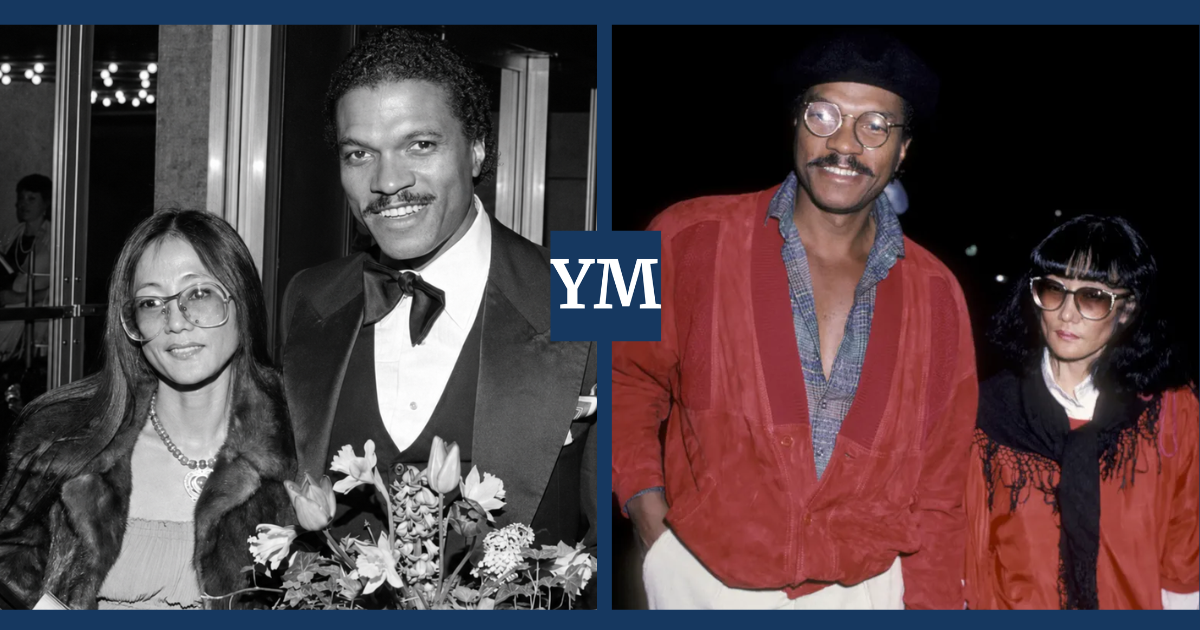
Most people who search her name already know the headline: Teruko Nakagami is the wife of Hollywood actor Billy Dee Williams, the man forever tied to Lando Calrissian in Star Wars. But that single fact barely scratches the surface. Long before she became Mrs. Williams, Nakagami had already lived a full chapter of her own — one that put her face on a landmark jazz album cover and linked her to one of the most influential saxophonists in American music history.
Nakagami has spent decades deliberately out of the spotlight, giving almost no interviews and keeping her personal life private even as her husband built one of the most recognizable careers in American film. That silence has left plenty of gaps online, and more than a few sites have filled those gaps with recycled, unverifiable claims. This article sticks to what can actually be traced back to reliable sources — Wikipedia’s sourced biography of Billy Dee Williams, contemporary jazz journalism, and reporting from outlets that cite named sources — while noting clearly where the record gets murky.
Who Is Teruko Nakagami?
Teruko Nakagami is a Japanese-American woman best known publicly through her marriages to two accomplished men: jazz saxophonist Wayne Shorter and actor Billy Dee Williams. She has never pursued fame on her own terms, and she has no public career, film credits, or published work of her own. Several celebrity-bio sites report that she was born in Chicago, Illinois, sometime in the 1940s, and that her birth name was Irene before she began going by Teruko. None of these details come from a primary source Nakagami herself has confirmed, so they should be read as widely repeated rather than verified.
What is far better documented is the timeline of her two marriages, both of which unfolded inside worlds — jazz and Hollywood — that left a paper trail.
Her First Marriage: Wayne Shorter’s Muse
Before Billy Dee Williams, there was Wayne Shorter. The two met around 1961, not long after Shorter had toured Japan and developed a deep appreciation for Japanese culture. Contemporary jazz writing puts their wedding date at July 28, 1961, and their daughter Miyako arrived just over a week later. Shorter later credited the birth for inspiring “Infant Eyes,” one of his most tender compositions, telling biographer Michelle Mercer that he “saw all infancy in Miyako’s eyes.”
Nakagami’s most enduring public appearance came through music rather than film. She graces the cover of Shorter’s 1965 Blue Note album Speak No Evil, one of the most acclaimed jazz records of its era. By the time the album reached shelves in 1966, the couple had already separated — a fact critics have since read into the ironic title, though most agree the record’s warm, hopeful tone suggests Shorter meant it as a tribute to good memories rather than a parting shot. Shorter reportedly described his young wife as strikingly photogenic, once comparing her look to “a Japanese Audrey Hepburn.”
The marriage produced one daughter, Miyako, and ended sometime in the mid-1960s. Shorter went on to marry again before his death in 2023, and jazz historians still reference Nakagami primarily through her connection to Speak No Evil rather than through any details of their personal life together, which neither party discussed extensively in public.
Meeting Billy Dee Williams
By the early 1970s, Billy Dee Williams had already been married twice — first to Audrey Sellers, with whom he had a son, Corey Dee Williams, and then briefly to actress Marlene Clark. He relocated from New York to California in 1971, right around the time he crossed paths with Nakagami.
The couple married on December 27, 1972, in a small, private ceremony. Several entertainment outlets place the wedding in Tokyo, though that detail circulates mostly through secondary reporting rather than a single confirmed primary source. What’s certain is the date and the fact that Nakagami brought her young daughter, Miyako, into the marriage, blending her with Williams’ son from his first marriage. The couple welcomed their own daughter, Hanako Williams, in 1973.
At the time, Williams was riding a wave of career momentum. He had just starred opposite Diana Ross in Lady Sings the Blues, a role that turned him into what The New York Times once dubbed the “black Clark Gable.” Nakagami, by contrast, stayed almost entirely offstage, choosing to build a home life rather than step into her husband’s growing celebrity orbit.
Building a Family, Staying Out of the Frame
The couple’s household eventually centered around a striking Zen-inspired home in the Trousdale Estates section of Beverly Hills, which Williams purchased in 1984 and held onto for nearly three decades before selling it in 2012. Family life there blended three children from three different marriages: Corey, Miyako, and Hanako.
Williams has spoken about Nakagami warmly and specifically over the years, crediting her with grounding him. In one widely cited interview, he described his wife as “principled and moral, with this thing the Japanese have about honor,” adding that she pushed him to confront problems rather than avoid them. That kind of steady, values-driven presence is the through-line in nearly everything Williams has said publicly about his marriage.
Hanako Williams, the couple’s daughter, later worked as a gallery manager in Los Angeles, a detail that surfaces in several profiles of the family, connecting to Williams’ own lifelong second career as a painter. Beyond that, the family has kept its day-to-day life largely private, with Nakagami rarely photographed and almost never quoted directly.
The 1993 Divorce — and the Reconciliation
Twenty-one years into the marriage, Williams filed for divorce from Nakagami in 1993. At the time, his spokesperson told Jet magazine the split was amicable, not the kind of messy Hollywood separation tabloids tend to feed on. Reports from the period describe a quiet, respectful parting rather than a public falling-out.
The divorce, though, didn’t stick. By 1997, the couple had reconciled and were living together again, a detail confirmed in Williams’ own biographical record. Since then, the two have continued appearing together at family milestones and public events. In 2015, they were photographed together at the premiere of Star Wars: The Force Awakens, appearing alongside their grandson. Their relationship, whatever its legal status at any given moment, has clearly outlasted the paperwork.
Life Today
Nakagami has largely disappeared from public view in recent years, consistent with the low profile she has maintained for five decades. She has never courted media attention, given a tell-all interview, or built any kind of public persona separate from her marriages. What little is known about her day-to-day life comes filtered through Williams’ own comments in interviews and the handful of public appearances the couple has made together over the years.
That reticence is arguably the most consistent thread in her story. Where her husband built a career on being seen — first as a leading man in 1970s cinema, then as one of Star Wars‘ most enduring faces — Nakagami built a life on privacy, appearing in the historical record mostly through the achievements and relationships of the men she married.
Frequently Asked Questions
Who is Teruko Nakagami? She is a Japanese-American woman known as the wife of actor Billy Dee Williams and, before that, the first wife of jazz saxophonist Wayne Shorter.
When did Teruko Nakagami marry Billy Dee Williams? The couple married on December 27, 1972. It was Williams’ third marriage.
Did Teruko Nakagami and Billy Dee Williams get divorced? Williams filed for divorce in 1993, and outlets at the time described it as amicable. The couple later reconciled and were reported to be living together again by 1997.
Was Teruko Nakagami married before Billy Dee Williams? Yes. She was previously married to jazz saxophonist Wayne Shorter, whom she wed in 1961. She appears on the cover of his acclaimed 1965 album Speak No Evil.
Does Teruko Nakagami have children? She has a daughter, Miyako, from her marriage to Wayne Shorter, and a daughter, Hanako Williams, from her marriage to Billy Dee Williams.
Final Thoughts
Teruko Nakagami’s story is really two overlapping stories: one lived alongside a jazz innovator whose music still gets studied today, and another spent beside a Hollywood leading man who became a piece of pop-culture history through Star Wars. Through both, she chose to stay out of frame, and that choice has held for more than sixty years. It’s a rare kind of consistency in a world built around exposure — and it may be the closest thing to a defining trait the public record actually offers about her.